


How it runs · Stage 02 · Blueprint
The system on paper, before the system
Teams that want to see the whole design, the cost and what they will own before committing to a build.
- Price
- Included with the Audit; quoted separately for multi-phase programmes
- Time
- Included in the audit’s second week
- For
- Teams that want to see the whole design, the cost and what they will own before committing to a build.
- You own
- The diagrams
In short
The Blueprint is the design of your operations system before anything is built. It states what gets automated and what stays manual, the tools it runs on, the phases, the acceptance criteria for each phase and a fixed price. It is included in the Audit for the recommended first build and quoted separately for larger programmes. You own it either way.
How it runs
Step by step.
- 1Design
We draw the target workflow end to end: triggers, systems, decision points, who approves what, and where AI is used versus fixed rules.
- 2Stack
We choose the tools, preferring the ones you already run. Each choice is written down with its reason and its monthly cost.
- 3Phases
The build is cut into two-week sprints, each with one measurable outcome and its acceptance criteria.
- 4Quote
A fixed price for the whole build and for each phase, so you can stop after any phase with something that works.
What you get
- Target-state workflow diagrams
- Stack decision with reasons and running costs
- Phase plan: sprint by sprint, each with one outcome
- Acceptance criteria per phase
- Fixed quote and the ownership checklist
How we know it is done
- Every workflow in scope has a target-state diagram your owner has approved
- Every phase has a measurable acceptance criterion
- The quote is fixed and the ownership checklist is signed
What you own
- The diagrams
- The stack decision
- The phase plan and quote
- The right to build it with anyone
of corporate generative-AI pilots show no measurable P&L impact
Source: MIT NANDA, 2025Proof
Customer stories.
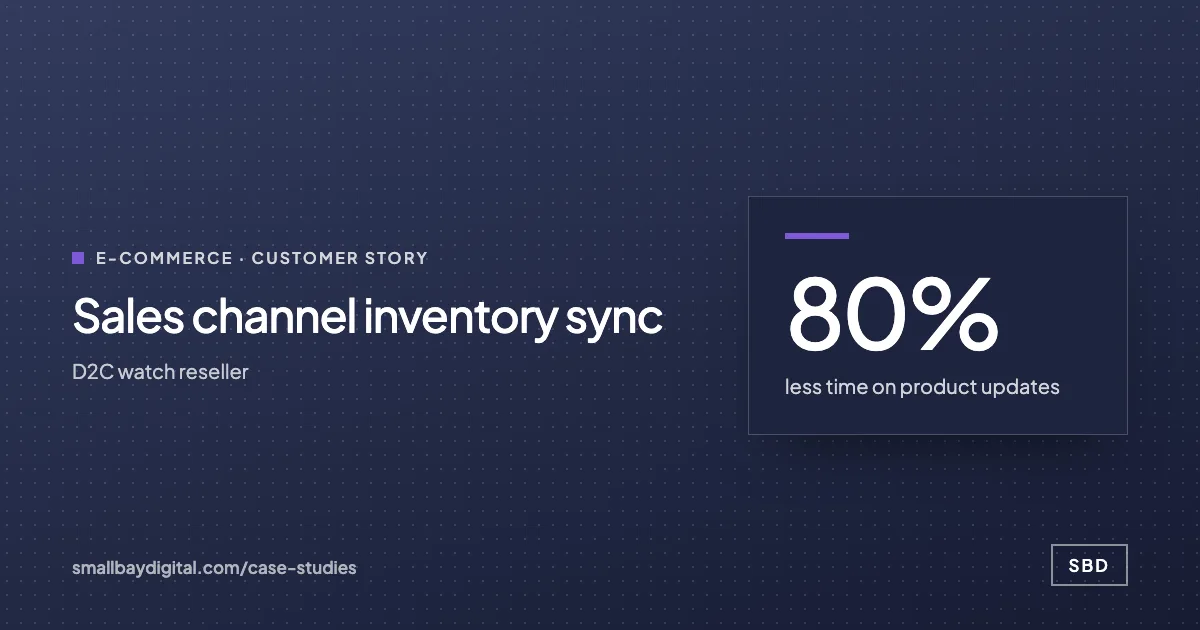
“A good blueprint is one your own engineer could build from. That is the test we hold it to.”
How it starts
Every project starts with an audit.
One to two weeks with the people who do the work. A costed blueprint in order of payback. The $500 is credited in full to the build.
- Audit1 to 2 weeks. $500, credited to your build.
- BlueprintIncluded in the audit’s second week. Included with the Audit; quoted separately for multi-phase programmes.
- Build2 to 8 weeks. From $2,500 one-time; most builds $5,000 to $15,000.
- Run60 days of hypercare, then monthly. Hypercare included; care plans from $1,000/month.
Questions
What people ask about the blueprint.
Can we take the blueprint and build it ourselves?
Yes. It is written so that your own team or another vendor can build from it. Some clients do exactly that.
How do you decide between rules, AI and agents?
Fixed rules wherever the step runs the same way every time. AI only where judgement is needed, such as reading a document. An agent only where the work is multi-step and the goal is clear. The decision is written into the blueprint.
What if we disagree with a stack choice?
We change it. The blueprint lists the alternatives we considered and why we preferred one. If you have a reason to prefer another, the design is updated before the quote.
What happens if the scope changes mid-project?
We agree the change in writing before doing the work, with its price and its effect on the timeline. You decide whether it is worth it. We do not absorb scope quietly and present a larger invoice at the end.
Who owns the code, the workflows and the accounts?
You do, from the first sprint. Every tool, automation and database lives in accounts in your name. Code sits in your repository. Documentation is part of the deliverable. If you stop working with us, everything keeps running.
The other stages
- How it runs
Audit
Teams of 1 to 1,000 people that know something is manual and expensive but not which fix to make first.
- How it runs
Build
Companies with a blueprint, or a clear problem, that want a system built fast and handed over complete.
- How it runs
Run
Every build we deliver, and systems built by others that need a team on call.
Related: Audit, Build, How we work
Stage 02 · Blueprint
Talk to the people who would build it.
Thirty minutes. Bring the work your team still does by hand. You leave with a yes or no on fit and the first thing we would build.
Book the call