Blog
Notes from the build
What we learn building automation and AI systems for teams of 5 to 1,000 people. Written by the people who build them, with the numbers.
Featured
Operations
Who noticed when the workflow stopped?
Most automation failures are silent: the run shows green and nothing happens for weeks. How it happens in Zapier and n8n, its cost, and the four checks we add.
 Pranav Mahaveer 5 min read
More posts
Explainer
What your DNS says about the software you use
How TXT, SPF, MX, DKIM and subdomain records reveal a company’s software, what a homepage adds, and how to check your own domain with the free stack checker.
Operations
What to do when your developer leaves
Your developer or agency has gone and the software still runs the business. How to get access back, move accounts into your name and hand the system over.
Operations
Who maintains a Zapier, Make or n8n setup after launch
Automations break after launch when apps change their APIs, logins expire or task limits run out. What to check each month, and who should own it.
Costs
Software maintenance cost for tools and AI-built apps
What to budget each month to keep an internal tool, automation or AI-built app running, what drives the cost, and how SBD prices care plans.
Security
Cursor app security review: what to check
Reviewing an app built with Cursor: secrets in the repo, auth on API routes, hallucinated packages, rules file and MCP injection, and the 2025 Cursor CVEs.
Security
Exposed API keys in AI-built apps: find and fix them
How API keys leak from Lovable, Bolt, v0, Replit and Cursor apps, how to search your bundle and Git history for them, and how to rotate and move them safely.
Security
Is my Bolt.new app secure? The checks to run
How to check a Bolt.new app before launch: row-level security on Supabase or Bolt Database, keys in the bundle, Netlify secrets and the Security page.
Security
Replit app to production: a checklist
Taking a Replit Agent app live: separate dev and production databases, production secrets, backups, and what the July 2025 database deletion taught.
Security
Supabase row-level security for AI-built apps
How row-level security protects a Lovable, Bolt or v0 app on Supabase, the policy mistakes AI builders make, and the checks to run in under an hour.
Security
Taking a v0 app to production: security checks
Before a v0 app gets real users: auth inside every server action, NEXT_PUBLIC_ variables, Supabase rules, preview deployments and GitHub branch checks.
Explainer
Agentic AI vs AI agents vs generative AI
Clear definitions of generative AI, AI agents and agentic AI, a side-by-side comparison, examples, and when each one fits the work in a business.
Explainer
What an AI chatbot for your website costs
Website AI chatbot pricing in 2026: per-outcome, per-seat and per-message plans from Intercom, Zendesk, Tidio and Chatbase, model costs and setup work.
Explainer
AI SDR vs human SDR: cost, risk and fit
What AI SDR tools such as 11x, Artisan, Apollo and Clay do, what a human SDR costs, the email and LinkedIn rules, and where each one fits.
Explainer
AI voice agent pricing per minute in 2026
What an AI phone agent costs to run per minute: platform fee, phone line, transcription, model and voice, with Retell, Vapi, Bland and ElevenLabs compared.
Explainer
How to automate data entry, step by step
How to automate data entry: find the sources, choose capture, add checks and review, write to the system of record, and measure the time saved.
Explainer
MCP for business owners, in plain language
What the Model Context Protocol is, what it changes for a business, official MCP servers from Stripe and HubSpot, and the risks and controls.
Systems
Bring your own agent and the software you buy
More software now lets your own AI agent read data, receive events and take actions over MCP or an API. What to ask vendors before you sign in 2026 and 2027.
Costs
AI automation agency vs freelancer vs in-house hire
The trade-offs between an AI automation agency, a freelancer and an in-house engineer, with real costs for each and when each one is the right call.
Costs
n8n vs Zapier vs Make at 10k and 100k tasks a month
What Zapier, Make and n8n cost at 10,000 and 100,000 tasks a month, from each vendor’s pricing page on 14 Nov 2026, and when to pick which.
Systems
Poppy 1.0 and what personal agents will ask of you
Sierra released Personal Agent Protocol (Poppy) 1.0 on 13 Nov 2026. What a mid-size business off Shopify should expose to personal agents, and in what order.
Systems
Moving off OpenAI Agent Builder before 30 November
OpenAI Agent Builder and Evals are due to close on 30 November 2026. What to export now, where agents can go, how to move them and which ones to retire.
Method
A forward deployed engineer’s first 30 days
How an SBD forward deployed engineer spends month one: observing the work, ranking changes with leadership, shipping the first builds and getting them used.
Systems
What moving off Retool involves
What we learned moving three operations systems from Retool to custom code: the data model, screens, workflows and cut-over, and the signs it is time to move.
Method
What an SBD build passes before go-live
The standards, security checks, tests and handover documents an SBD build goes through before it reaches real users, and why each one of them exists.
Strategy
Does an AI agent still need Zapier?
A widely shared post argues agents will take Zapier to zero. We run both daily. Where the argument is right, where it is wrong, and what we use for each job.
Systems
How much should an AI agent be allowed to do?
An agent with an unscoped token dropped a production database and its backups in nine seconds. Our rule: read widely, write narrowly, cap spend, escalate.
Systems
Invoice intake with an agent: the first thirty days
The first month of an invoice intake agent from the inside: how the queue behaves, which invoices escalate, and the three settings that decide whether it lasts.
Pricing
n8n self-hosted or cloud for a team under 50?
Self-hosting n8n costs a few dollars a month for the server and far more for the person who runs it. The break-even, what you take on, and our advice.
Systems
Six months of AI agents in production: what broke
The model held up. A renamed field, a drifting confidence score, a new invoice format and an unread Slack channel did not. What failed and what we changed.
Strategy
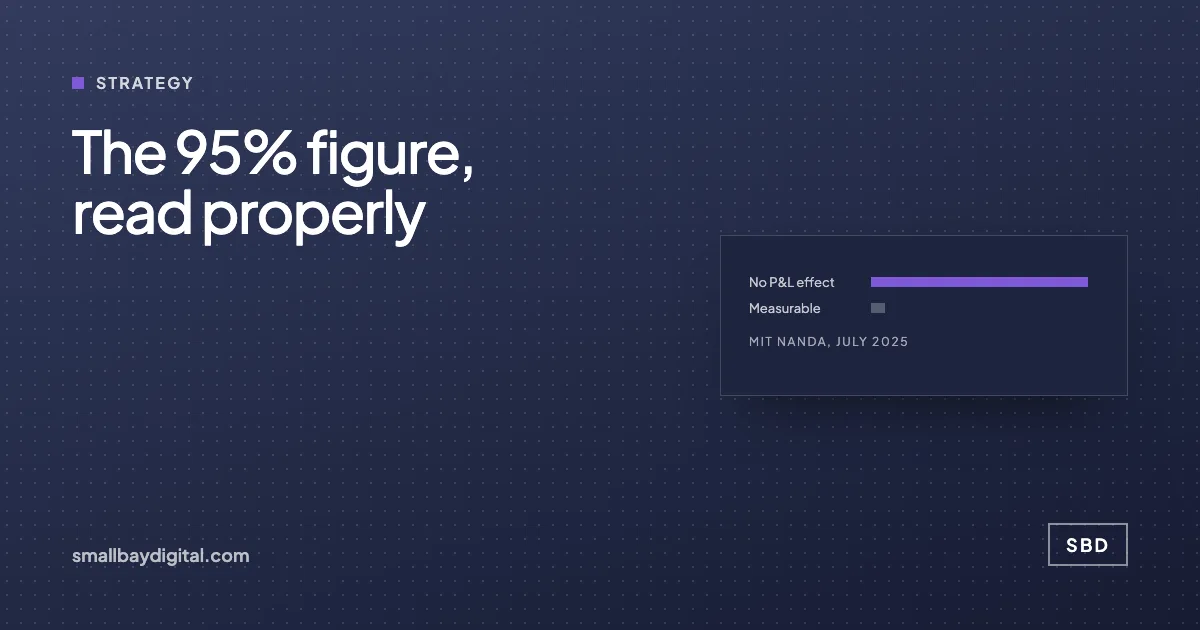
The 95% figure, read properly
MIT says 95% of generative AI pilots show no profit impact. What the study of 52 interviews and 153 surveys found, what it did not, and what the other 5% did.
Pricing
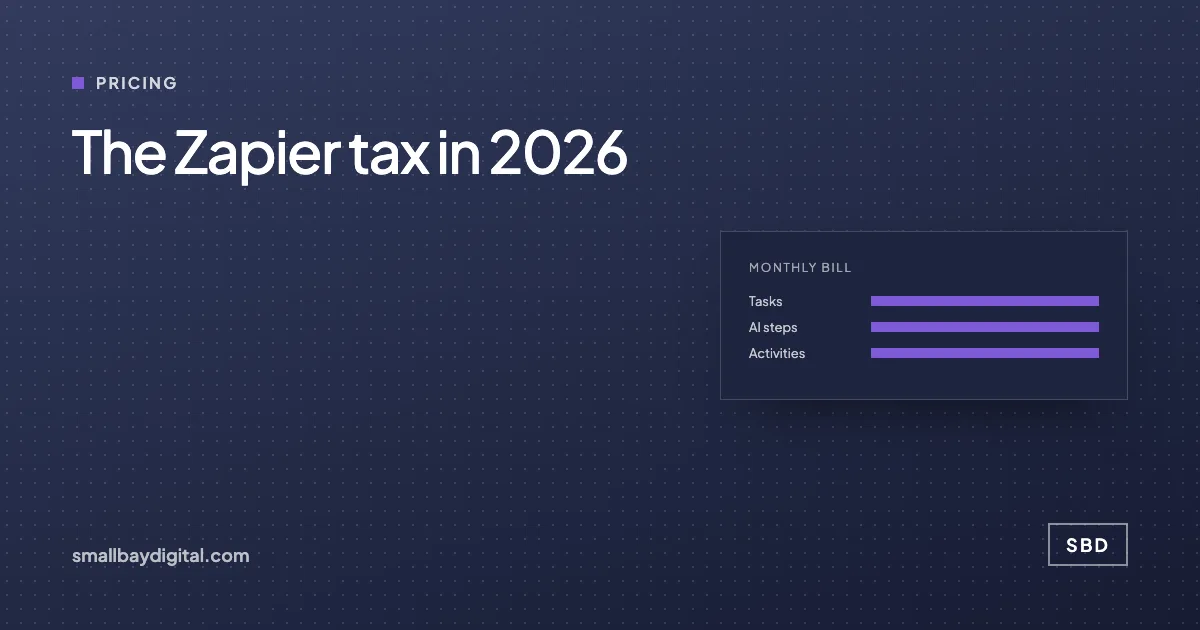
The Zapier tax in 2026: what a 20-person team pays
Zapier now bills tasks, AI steps by model tier, and Agents in activities. A worked bill for a 20-person company, and what the same workflows cost on n8n.
Strategy
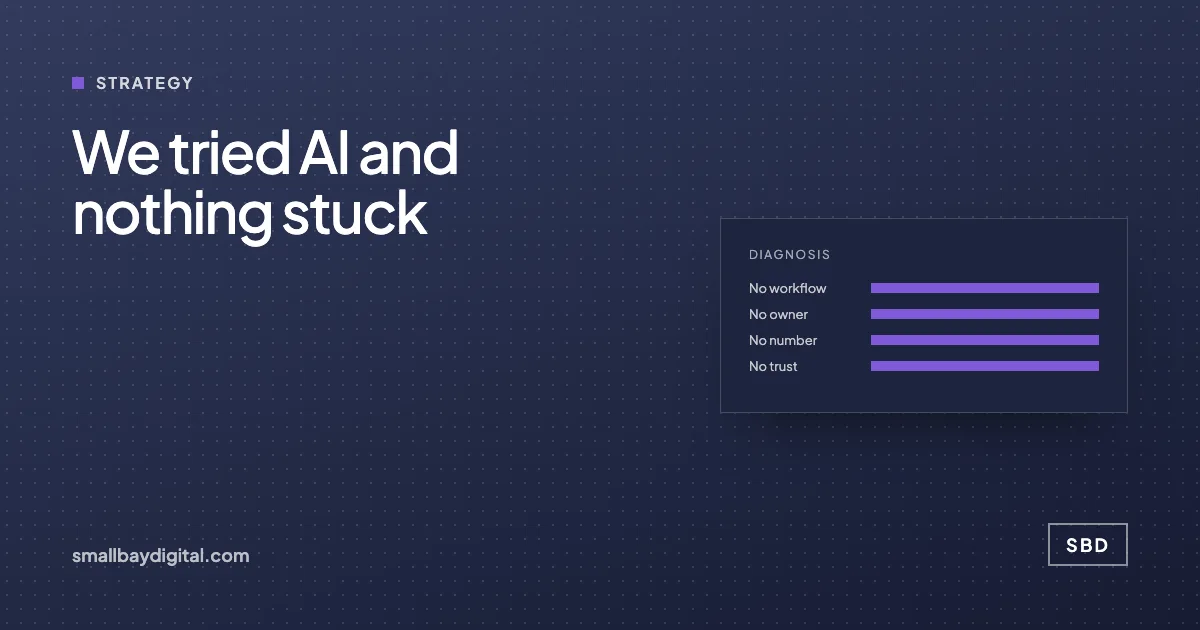
We tried AI and nothing stuck
The sentence we hear on most first calls is rarely about the AI. Four reasons small companies abandon tools, and the change that makes the next try stick.
Security
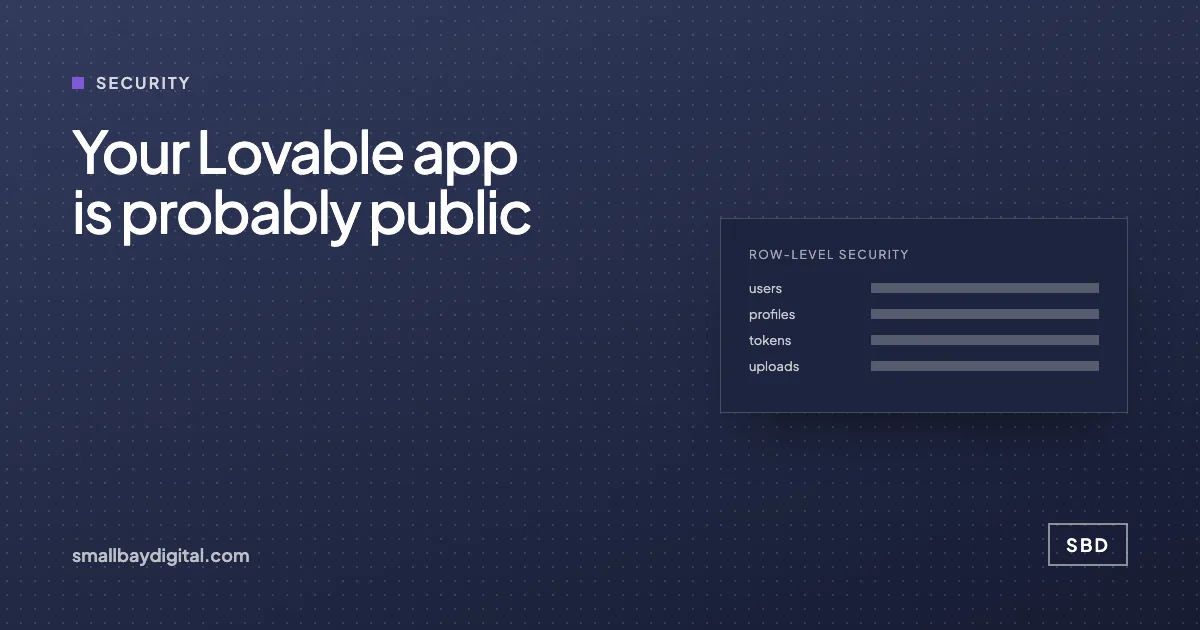
Your Lovable app is probably public
Over 170 Lovable-built apps had open databases in one disclosure. How the leak works, the three named breaches of 2026, and the twenty-minute check to run.
Systems
How to move a Zap-based process to an AI agent
A step-by-step guide to replacing a chain of Zaps with an agent: inventory, data model, approvals, side-by-side running, switch-off and pitfalls.
Checklist
AI readiness checklist: a ten-point self-assessment
Score your business on ten yes-or-no questions across data, process, tools, team and strategy, then see whether to build now or fix foundations.
Strategy
Task automation vs AI systems: how they differ
What task automation and AI systems each are, when each one fits, and how their cost and risk differ, with the five layers an AI system needs.
Find out what is worth automating
About 95% of AI pilots never reach the profit line. We start with the work your team still does by hand and measure each build by the hours it saves.
See how we work