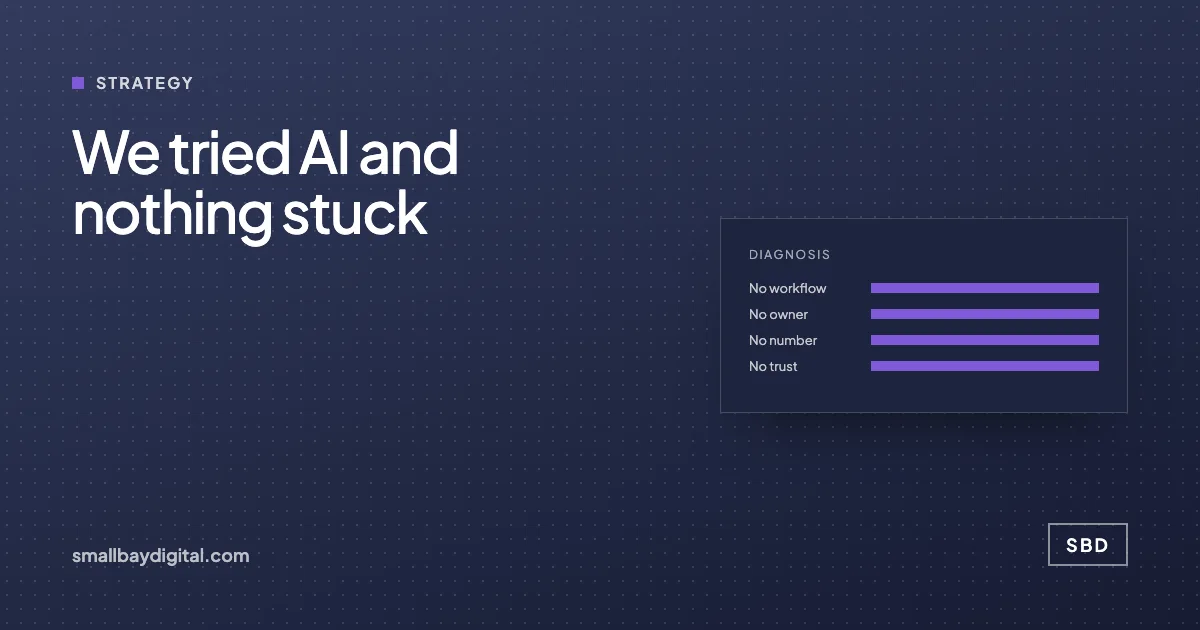






















Most companies that tried AI and saw nothing stick made the same mistake: they decided what to build in a meeting room, then handed it to the people who do the work. A forward deployed engineer reverses the order. They start where the work happens and decide from there.
This is what the first month looks like when we embed one.
The short answer
Week one is observation: sitting with each team and mapping the manual work in hours. Week two is ranking: a written priority list agreed with leadership. Weeks three and four are building and rolling out the first tools, automations or agents with the teams that asked for them. The month ends with a review of what shipped, what is used and what comes next.
Before day one
A discovery call with leadership sets the scope: which teams, how much of the engineer’s time, overlap hours, and how data will be handled. Access is set up through accounts and roles you own, with least privilege, before the engineer starts. Nothing is built in accounts in our name.
Week 1: observe
The engineer spends time with each team in the tools they use. Not interviews about the process, but the process itself: the copy from the inbox into the CRM, the spreadsheet rebuilt every Monday, the approval that waits two days because the right person is travelling.
Each piece of manual work is written down with three numbers: how often it happens, how long it takes, and what goes wrong when it is late or wrong. By Friday there is a map of the manual work across the teams, in hours.
Week 2: rank
The map becomes a priority list. Each item gets the hours it would save, how hard it is to build, the risk if it goes wrong, and whether AI genuinely helps or a plain rule does the job better. Leadership reads the list and agrees the order in writing.
Two kinds of item usually rise to the top: work that is frequent and simple, which pays back fast, and work where a mistake is expensive, which is worth doing carefully even if it is rare.
Week 3: build
The first builds go live with the team that asked for them, in their tools: an enquiry that reaches the CRM with its fields filled, a report that assembles itself overnight, an agent that drafts the reply and waits for a person to approve it. Each one is tested on a sample of real cases before it runs unattended.
Week 4: roll out
A build that nobody uses has saved nothing. The engineer trains people at their desks, names an owner on the team for each tool, and stays close while the old way is retired. Usage is tracked, not assumed.
The monthly review
At the end of the month leadership sees four things: what shipped, what is used, the hours and costs it changed, and the next items on the list. Then the company decides: continue, change course, or stop. Everything built stays in its accounts, documented.
When this is the wrong model
If you already know exactly what to build, a fixed-price build is faster and cheaper. If you have the plan and someone to direct the work, a platform specialist on Extend adds capacity without the observation phase. Forward deployed engineers earn their place when the hardest part is knowing what to change.
Read more: Forward deployed engineers, and forward deployed engineers or staff augmentation?