Infrastructure
Vercel consultant: internal tools, portals and APIs that deploy cleanly
SBD builds web apps, client portals, form endpoints and scheduled jobs on Vercel for teams of 1 to 1,000 people, usually with Supabase underneath, on a Vercel team in your name. Internal tools start at $3,000 and workflow automation at $1,000, with the fixed price set after a $500 Automation Audit that is credited to the build.
- Tool
- vercel.com
- Usually paired with
- Supabase, Resend, Cloudflare, Stripe
- Timeline
- Most builds live in 2 to 8 weeks
- Owned by
- You, with accounts, credentials and code in your name.
What we build on Vercel
- Host portals and internal apps with preview deployments
- Run serverless endpoints for webhooks and forms
- Keep secrets in environment config, never in code
- Set up monitoring and rollbacks
What we sync
Workflows we are asked for
- Form endpoint on Vercel to CRM and email
- Client portal hosted on Vercel over Supabase
- Webhook receivers with signature checks
- Preview deployments for client review
Tools Vercel usually needs to talk to
-

Vercel and Supabase
Postgres with auth, storage and APIs, and the database under most apps we build or rescue.
-

Vercel and Resend
Transactional email for developers, with clean deliverability tooling.
-

Vercel and Cloudflare
DNS, edge functions, storage and security in front of your apps.
-

Vercel and Stripe
Payments, invoicing and subscriptions for software and services businesses.
What a Vercel developer from SBD builds
Vercel is where most of our custom front ends and light back ends run.
Our own website runs on Vercel, and its contact and application forms post to Vercel functions that send email through Resend. Client work on Vercel falls into three groups: internal tools and portals on Next.js, React or Astro with Supabase for data and sign-in; API routes that receive webhooks from other systems; and scheduled jobs that sync, report or chase.
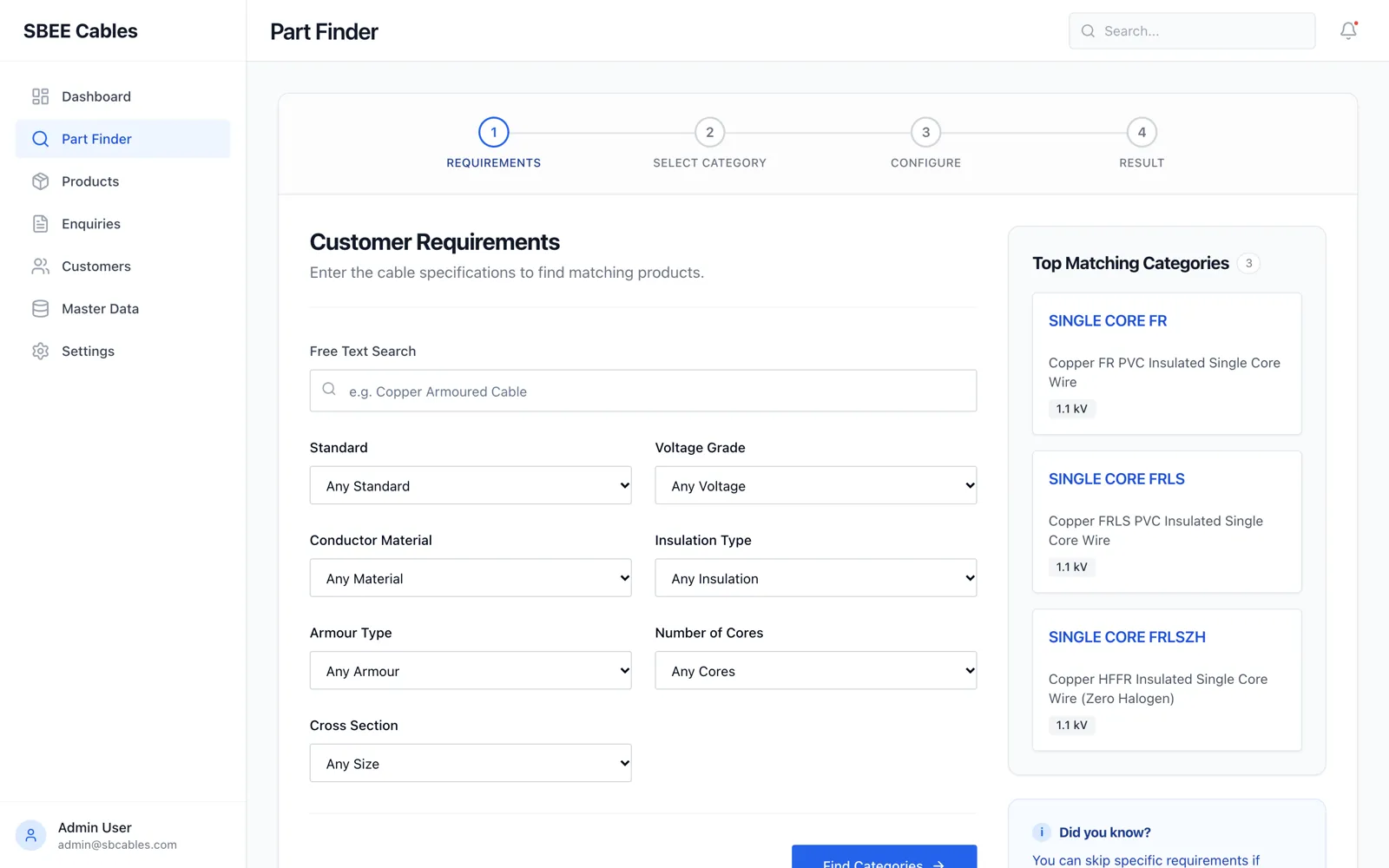
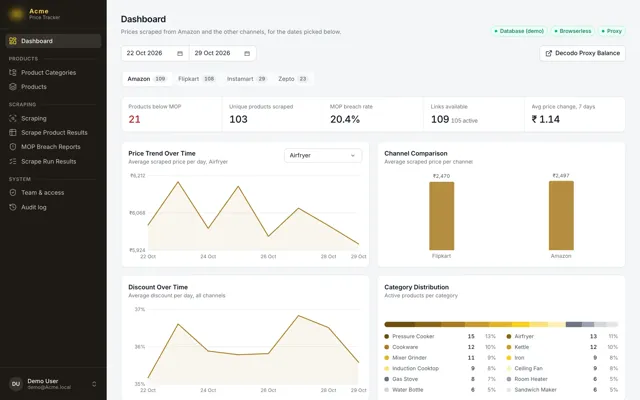
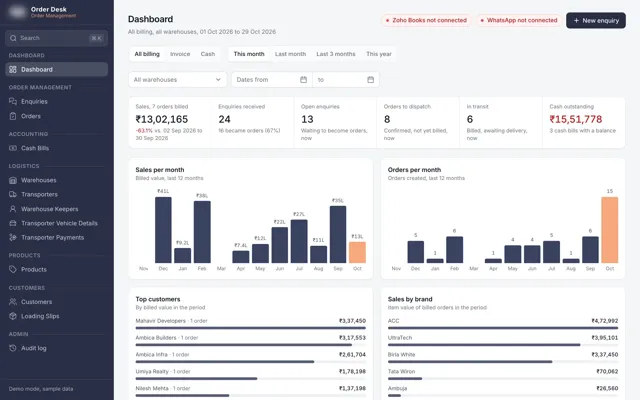
Published examples include the consulting internal tool that replaced a SmartSuite workspace with roles enforced on the server, and the SBEE Cables part finder. Our Vercel portfolio lists the rest, from a garment operations system to a visitor management system.
When Vercel is the right host, and when it is not
A good fit
Vercel suits web apps with a modern JavaScript framework, preview deployments for every change, and back-end work that fits into short functions: API routes, webhook receivers, server-rendered pages and scheduled tasks. Billing for functions is based on active CPU time and provisioned memory, and time spent waiting on I/O, such as a call to a model API or a database, does not count as active CPU. That makes it reasonable for glue code that mostly waits on other services.
We will put the work somewhere else when
- A job runs for hours or holds a long-lived connection; a worker on another host, Vercel Workflows or a queue fits better than stretching function limits.
- Requests carry large files; the 4.5 MB body limit means uploads should go straight to storage through signed URLs.
- Heavy compute runs on every request at high volume; a Cloudflare Worker or a dedicated server can cost less.
- The app is a simple internal list that a no-code tool already covers well.
Vercel plans, function limits and cron jobs
The first thing we check is the plan. Vercel's fair use guidelines restrict Hobby to non-commercial personal use, and define commercial use to include a paid consultant writing the code. Every client build we do therefore runs on Pro or Enterprise. From Vercel's pricing page and docs in October 2026:
- Pro$20 a month per developer seat, unlimited viewer seats, $20 of included usage credit, then pay as you go; SAML single sign-on is a $300 a month add-on.
- Enterprisecustom pricing; adds audit logs, directory sync through SCIM, project-level access control and up to 12 custom environments against 1 on Pro.
- Function duration300 seconds by default; Pro and Enterprise can raise it to 800 seconds, with 1,800 seconds in beta.
- Function size and memory250 MB uncompressed bundle (500 MB for Python); up to 4 GB memory on Pro and Enterprise.
- Payloads4.5 MB for a request or response body, above which the function returns a 413.
- Cron jobs100 per project on every plan; Pro runs to the minute, while Hobby is limited to once a day and may fire anywhere within the hour.
Where Vercel builds go wrong, and what we do instead
- 01
Region placement is the quiet one.
Functions run in a single region by default, iad1, and a function far from its database pays that distance on every query. We set the function region to match the Supabase or Postgres region before launch.
- 02
Logs are the second. Pro keeps runtime logs for one day, or 30 days with the Observability Plus add-on. A failure noticed on Monday from a Saturday cron run will have no logs left. We send errors to Sentry or a log table from the start, as in several of our portfolio builds, and write every scheduled job so it records its own start, finish and failure.
- 03
The third is secrets and previews.
Preview deployments are useful, but they need their own environment variables pointing at test data. We separate Production, Preview and Development variables, restrict who can see production values, and protect previews that show client data.
How we structure webhook receivers and background work on Vercel
Most of our Vercel functions receive something from another system: a payment event, a form submission, a booking, a signed document.
Every receiver follows the same pattern. It verifies the sender's signature on the raw body, stores the event with its ID, returns a success code at once, and leaves the real work to a scheduled job or a queue. That keeps each request well inside the function duration, makes a replayed event harmless, and means an outage in a downstream system delays work rather than losing it.
For work that needs to run for a long time, Vercel's docs point to Vercel Workflows, which can pause, resume and keep state over minutes to months without the function duration limit. We use that, or a worker elsewhere, rather than raising every function to its maximum duration and paying for the time.
Data usually sits in Supabase, with row-level security switched on for every table before any real data is loaded. Pages that only read public content are cached at the edge, so most traffic never starts a function at all.
How hiring a Vercel consultant from SBD works
- Step 1$500Automation AuditCredited to the build
- Step 2from$3,000Internal toolsFixed after the audit
- Step 3from$1,000Workflow automationFixed after the audit
- Step 4from$5,000Multi-module systemsFixed after the audit
- Step 5from$50Care planA month, after sixty days of hypercare
Every engagement starts with an Automation Audit at $500, credited in full to your build. For an existing Vercel app we review the plan, regions, environment variables, function durations, cron jobs, logging and costs, and give you a ranked list of fixes with a fixed price for each. For new work we produce a blueprint that names the framework, data store and hosting.
Internal tools start at $3,000, workflow automation at $1,000, multi-module systems at $5,000 and micro-SaaS products at $10,000. Work runs in two-week sprints with sixty days of hypercare, and care plans start at $50 a month for monitoring, dependency updates and small changes. Your Vercel subscription is billed to you by Vercel.
What you own, and moving onto or off Vercel
Everything below is in your name when the build ends.
- The Vercel team, the projects, the domains and the Git repository are in your name, with our access removable in one step.
- You receive the source code, a deployment guide, a list of environment variables with their owners, and a runbook for each cron job and webhook endpoint.
- Because we build on standard frameworks, nothing ties the code to Vercel beyond its configuration file.
- Teams move to Vercel from shared hosting, Heroku or a no-code front end; the reverse, onto a server or container you run, is a known path if cost or policy demands it.
- The audit tells you which fits.
Vercel at enterprise scale
Larger organisations use Vercel for marketing sites, customer portals and internal tools, often with a platform team owning the Vercel account and product teams owning projects inside it. The pressure usually comes from security and finance at the same time: who can deploy, who can see production secrets, and why the usage bill moved.
Single sign-on and provisioning
SAML single sign-on is available on Pro as an add-on and SCIM directory sync on Enterprise. We map identity provider groups to Vercel roles so access follows HR records.
Access to production secrets
We separate environment variables by environment, limit who can read production values, and keep the authoritative copy in your secret manager.
Audit and change history
Audit logs are an Enterprise feature. On Pro we rely on protected branches, required reviews and deployment history in Git, and document who can promote a deployment.
Cost visibility
We set spend alerts, check function durations and memory against real traffic, and cache what can be cached, so the bill tracks usage you can explain.
Data location
We pin function regions next to your database and document where each piece of data is processed and stored for your records.
Monitoring beyond the log window
Errors and job results go to a monitoring tool or log table you own, so a problem found after the log window has closed can still be traced.
Engagements we take on
Already on Vercel, client app on a Hobby account
A contractor deployed a business app on a personal Hobby account, which the fair use terms do not allow. We move it to a Pro team in your name, move domains and variables, and remove personal accounts from the path.
Already on Vercel, cron jobs failing quietly
Scheduled syncs miss runs and nobody notices until data is wrong. We add job logging, alerts and idempotent retries, and move long jobs off functions where they exceed sensible limits.
Already on Vercel, slow pages and rising bills
Functions run far from the database and some routes do too much on each request. We fix regions, add caching and move heavy work to background jobs, then measure the result.
Already on Vercel, need governance before more teams join
More projects are arriving and access is ad hoc. We set up roles, single sign-on where your plan includes it, branch protections and a deployment policy your platform team can own.
Read next
Sources
- Vercel, Pricing page (plans, seats, included credit, SAML add-on, Enterprise features), checked 29 October 2026
- Vercel, Vercel Functions limits (duration, memory, bundle size, payload, region), checked 29 October 2026
- Vercel, Cron jobs usage and pricing (jobs per project, interval, precision), checked 29 October 2026
- Vercel, Fair use guidelines (commercial usage definition, Hobby restriction), checked 29 October 2026
Standards on every build
Validation, retries, reconciliation, audit logs and alerts come as standard, with credentials and accounts in your name. Read the integration standards
What people ask about Vercel
Whose account hosts the app?
Yours. We deploy into a Vercel team in your name and work through membership you can revoke.
Start with the one Vercel workflow your team still runs by hand
Bring it to a discovery call. You leave with a yes or no on fit, an outline of the build and what we would do first.
Book the call