















For CFOs and finance managers
Raise invoices from the record that proves the work was done.
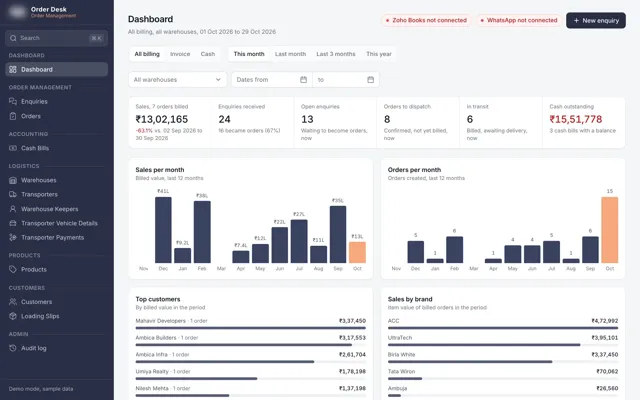
Month end is slow when finance has to chase delivery notes and rebuild invoices from emails. We raise invoices from the order or job record that operations already keeps, post them to your accounting system and log who approved what.
For finance leads at companies of 10 to 1,000 people who close the month by chasing paperwork from other teams.



less manual time once invoices were raised from the order record, for a building materials supplier
Read how it was measuredBefore and after
What changes in a normal week.
Today
- Invoices are typed up from emails and delivery notes forwarded by operations.
- The first week of the month goes on matching statements to records by hand.
- Approvals sit in someone’s inbox, and the evidence for them is scattered.
- Auditors ask for the trail behind a number and someone spends a day finding it.
After the build
- The invoice is created in Xero, QuickBooks or Zoho Books when the order is marked delivered.
- Statements are read and matched to records as they arrive, with mismatches queued for review.
- Approvals happen against limits you set, and each one is stored with a name and a time.
- Each posted entry links back to the order, document and approval behind it.
What we build
The systems behind the change.
Built in your accounts, at a fixed price agreed after the audit. Builds start at $1,500.
- Invoices from source records
When an order or job reaches the stage you choose, the invoice is drafted in your accounting system with the line items from that record.
- Statement and document matching
Bank statements, supplier invoices and receipts read and matched to records, with anything that does not match queued for a person.

- Approval rules with a log
Spend and credit approvals routed by amount and stored with who approved, when and on what evidence.



Proof
A team that has already made the change.
-
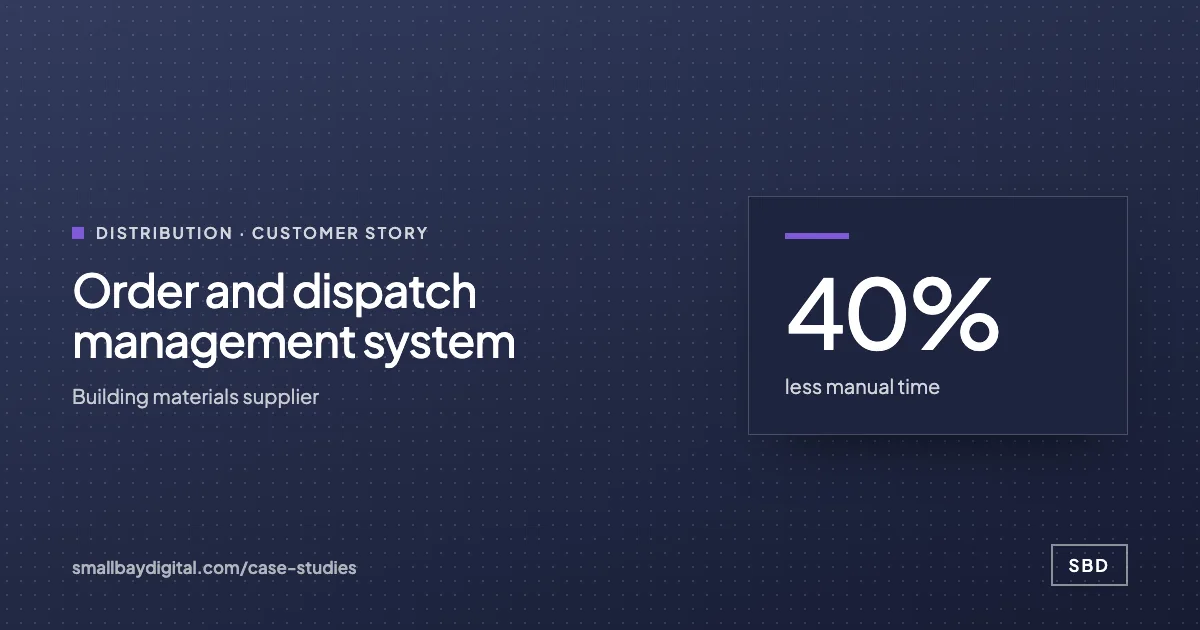 Building materials supplier · Distribution Order and dispatch management system 40%less manual time5+stakeholder types kept informedAutoinvoicing Read the story
-
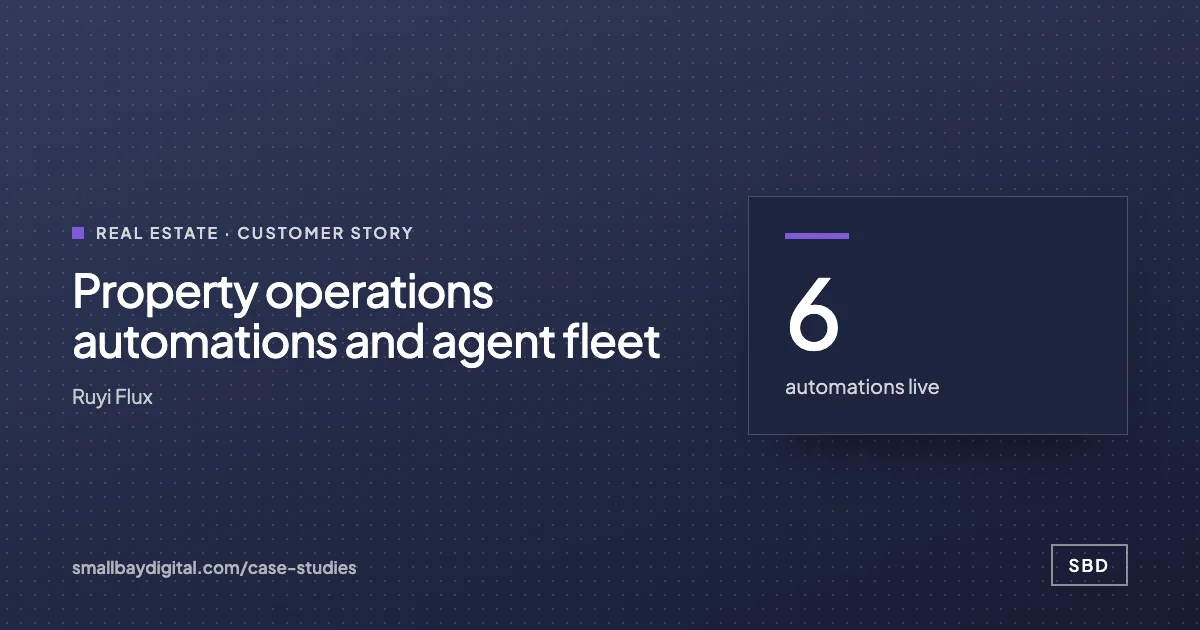 Ruyi Flux · Real Estate Property operations automations and agent fleet 6automations live~120properties covered12agents in build Read the story
How it starts
Three steps, each with a price.
- 01Discovery call
Thirty minutes on the work your team does by hand. Free, and you leave with a yes or no on fit.
- 02Automation Audit, $500
One to two weeks with the people who do the work. Each fix gets hours saved and a fixed price. Credited to the build.
- 03Build, from $1,500
Two-week sprints in your accounts, then 60 days of hypercare by the same engineers.
Questions
What people ask first.
What controls stop the automation posting something wrong?
You set the limits. Anything above an amount, from a new supplier or outside the expected pattern goes to a named approver before it posts, and drafts stay drafts until a person releases them.
Can our auditors follow the trail?
Each automated step writes a log entry with the source document, the rule applied and the person who approved it, kept in your own accounts where your auditors can read it.
Who can see our financial data?
Everything is built in your accounts, so your access controls apply. We work under a data processing agreement and remove our access at handover if you ask.
What does it cost?
A $500 audit, credited to the build, sets the scope. A single workflow such as invoicing from orders starts at $1,500 at a fixed price.
Finance leads
Bring one process your team still runs by hand.
On a discovery call we look at how it runs today and tell you what it would take to change it, with a price. The call is free.
Book a discovery call